Despite the 90-day cap on listings, Airbnb is approaching 20,000 rentals a week, up from 1,000 as recently as 2013, according to data scraped from its site.
from HOTELMARKETING.COM http://ift.tt/2E0bPPz
Monday, February 5, 2018
Airbnb is taking over London

Inside the shakeup at Airbnb
Airbnb is not going public in 2018. The company's CEO Brian Chesky has to focus on the short term for now, as it has three big executive spots unfilled.
from HOTELMARKETING.COM http://ift.tt/2EIDTrG
Sunday, February 4, 2018
Blue Star Program Promotes Stewardship in the Florida Keys
Why do you dive? For many (if not all), the answer is the beauty of the world beneath the waves. Coral reefs are one of the most diverse ecosystems on the planet. Thousands of species rely on reefs for survival. Coastal communities all over the world depend on coral reefs as well, for food, protection, and jobs. The only living barrier reef in the continental U.S. surrounds a chain of islands at the southernmost tip of Florida.
Florida Keys National Marine Sanctuary protects the spectacular marine resources that draw an estimated 700,000 divers and snorkelers each year. With so many visitors, environmental stewardship is imperative. And that's where the Blue Star program comes in.
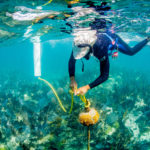
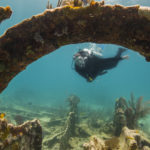
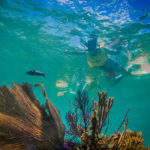
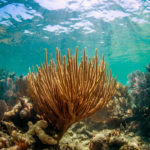
What is the Blue Star program?
To strike a balance between the environment and the economy, the sanctuary, with National Marine Sanctuary Foundation support, established the Blue Star program to recognize dive and snorkel businesses that promote responsible and sustainable practices. The program, started in 2009, has become so successful that it is expanding to fishing guides this year. No matter where you stay in the Florida Keys, there is a Blue Star business nearby.
A range of factors is stressing the reefs in the Keys, including overuse by uninformed or irresponsible visitors. However, unlike some stressors such as warming waters and disease, we can easily prevent damage from divers and snorkelers.
Blue Star operators work hard to help customers become better environmental stewards. As divers explore Sanctuary, many unintentionally come into contact with the reef by touching, kicking, or dragging gear. The average diver makes contact with coral 18 times during a 60-minute dive, according to a Sheffield Hallam University (England) study conducted in the sanctuary.
Even a slight touch can seriously damage delicate corals. Divers can cause abrasions that remove the protective mucous layer, leaving corals susceptible to disease and predation. Corals grow incredibly slowly, at a rate of 0.1 to 4 inches (0.3 to 10 cm) per year depending on the species. Frequent breakage of coral due to diver impacts challenges the growth of the reef as a whole. Kicking up sand or sediment with fins can also injure coral polyps and sponges.
Becoming a Blue Star operator
To meet Blue Star program requirements, operators must train all staff on the importance of coral reef ecosystems, diving and snorkeling etiquette, and the rules and regulations of Florida Keys National Marine Sanctuary. Dive staff receive educational materials to share during pre-trip environmental briefings, which introduce guests to the sanctuary and remind them of sustainable diving and snorkeling practices. Studies show that divers who participate in these types of briefings cause significantly less coral damage than those who do not.
Blue Star operators also agree to use mooring buoys when available, recycle engine oil, and offer at least one conservation activity, such as a marine-debris cleanup or coral restoration, per year.
Hurricane Irma cleanup
Since Hurricane Irma in September 2017, Blue Star operators have rallied around an effort to remove marine debris swept into the sanctuary waters by winds and storm surge. As land-based debris removal operations took place, operators formed plans to remove marine debris from residential canals, waterways, and along the reef. A massive effort, led by the U.S. Coast Guard and the Florida Fish and Wildlife Conservation Commission, removed nearly 2,000 vessels identified as potential pollution threats.
Reef assessments and information from local dive operators cataloged everything from sofas and refrigerators to pipes and busted lobster traps littering the reef tract and backcountry flats. Blue Star operators are doing their part by offering special debris-removal trips, during which customers can help clean up the sanctuary.
When planning a dive or snorkel trip in the Florida Keys, book with a Blue Star charter. Doing so means you'll be selecting an operator dedicated to education and coral-reef conservation. Many Blue Star dive shops offer regular conservation activities. These include cleaning up marine debris, hunting invasive lionfish, or partnering with local nonprofit organizations like Coral Restoration Foundation and Mote Marine Laboratory to re-establish live corals. To find a list of Blue Star operators or express interest in becoming a Blue Star operator, click here.
By guest authors Marlies Tumolo and Eric Raslich, Florida Keys National Marine Sanctuary
The post Blue Star Program Promotes Stewardship in the Florida Keys appeared first on Scuba Diver Life.
from Scuba Diver Life http://ift.tt/2s4PVJk
Blue Star Program Promotes Stewardship in the Florida Keys
Why do you dive? For many (if not all), the answer is the beauty of the world beneath the waves. Coral reefs are one of the most diverse ecosystems on the planet. Thousands of species rely on reefs for survival. Coastal communities all over the world depend on coral reefs as well, for food, protection, and jobs. The only living barrier reef in the continental U.S. surrounds a chain of islands at the southernmost tip of Florida.
Florida Keys National Marine Sanctuary protects the spectacular marine resources that draw an estimated 700,000 divers and snorkelers each year. With so many visitors, environmental stewardship is imperative. And that’s where the Blue Star program comes in.
What is the Blue Star program?
To strike a balance between the environment and the economy, the sanctuary, with National Marine Sanctuary Foundation support, established the Blue Star program to recognize dive and snorkel businesses that promote responsible and sustainable practices. The program, started in 2009, has become so successful that it is expanding to fishing guides this year. No matter where you stay in the Florida Keys, there is a Blue Star business nearby.
A range of factors is stressing the reefs in the Keys, including overuse by uninformed or irresponsible visitors. However, unlike some stressors such as warming waters and disease, we can easily prevent damage from divers and snorkelers.
Blue Star operators work hard to help customers become better environmental stewards. As divers explore Sanctuary, many unintentionally come into contact with the reef by touching, kicking, or dragging gear. The average diver makes contact with coral 18 times during a 60-minute dive, according to a Sheffield Hallam University (England) study conducted in the sanctuary.
Even a slight touch can seriously damage delicate corals. Divers can cause abrasions that remove the protective mucous layer, leaving corals susceptible to disease and predation. Corals grow incredibly slowly, at a rate of 0.1 to 4 inches (0.3 to 10 cm) per year depending on the species. Frequent breakage of coral due to diver impacts challenges the growth of the reef as a whole. Kicking up sand or sediment with fins can also injure coral polyps and sponges.
Becoming a Blue Star operator
To meet Blue Star program requirements, operators must train all staff on the importance of coral reef ecosystems, diving and snorkeling etiquette, and the rules and regulations of Florida Keys National Marine Sanctuary. Dive staff receive educational materials to share during pre-trip environmental briefings, which introduce guests to the sanctuary and remind them of sustainable diving and snorkeling practices. Studies show that divers who participate in these types of briefings cause significantly less coral damage than those who do not.
Blue Star operators also agree to use mooring buoys when available, recycle engine oil, and offer at least one conservation activity, such as a marine-debris cleanup or coral restoration, per year.
Hurricane Irma cleanup
Since Hurricane Irma in September 2017, Blue Star operators have rallied around an effort to remove marine debris swept into the sanctuary waters by winds and storm surge. As land-based debris removal operations took place, operators formed plans to remove marine debris from residential canals, waterways, and along the reef. A massive effort, led by the U.S. Coast Guard and the Florida Fish and Wildlife Conservation Commission, removed nearly 2,000 vessels identified as potential pollution threats.
Reef assessments and information from local dive operators cataloged everything from sofas and refrigerators to pipes and busted lobster traps littering the reef tract and backcountry flats. Blue Star operators are doing their part by offering special debris-removal trips, during which customers can help clean up the sanctuary.
When planning a dive or snorkel trip in the Florida Keys, book with a Blue Star charter. Doing so means you’ll be selecting an operator dedicated to education and coral-reef conservation. Many Blue Star dive shops offer regular conservation activities. These include cleaning up marine debris, hunting invasive lionfish, or partnering with local nonprofit organizations like Coral Restoration Foundation and Mote Marine Laboratory to re-establish live corals. To find a list of Blue Star operators or express interest in becoming a Blue Star operator, click here.
By guest authors Marlies Tumolo and Eric Raslich, Florida Keys National Marine Sanctuary
The post Blue Star Program Promotes Stewardship in the Florida Keys appeared first on Scuba Diver Life.
from Scuba Diver Life http://ift.tt/2s4PVJk
Saturday, February 3, 2018
Cyberbullying in the Scuba World
Cyberbullying is part of that juvenile high school mentality that leads adolescent boys and girls to target other kids — right? It certainly couldn't happen on a forum or Facebook page devoted to scuba diving. That's what I believed until a few months ago when I got into a discussion with a couple of divers on a well-known technical-diving forum. I had experienced the occasional catty remark in the past, but what happened as a result of my latest post became a somewhat surreal experience that left me wondering just how ugly online discussions can get.
Personal attacks
It all began because I'd written an article about an expedition to explore a flooded mine in Newfoundland. I posted the published article on several diving forums to help promote readership. A couple of divers — anonymous posters — decided that the article and the entire expedition had merely been a façade for a commercial venture. I explained how we initiated the expedition and showed that we had not factored any commercial interests into the equation.
Cyber trolls decided I was complicit in a conspiracy. The language became offensive, aggressive and very personal. I still wasn't too worried until, ultimately, the anonymous "trolls" began to post comments that were much more ominous. "If you want to step from behind the keyboard" said one forum member, "I'd LOVE to do some full contact sparing…I'm an ex-special forces officer… get in touch I'll make it happen." Even more alarming, this troll seemed to be suggesting he was going to hunt me down. "I'm not hard to find…like you…so go f— yourself, it's a small world."
Threats like this made me wonder — were others being bullied on diving forums?
Cyberbullying in the scuba world
I posted notices on several diving forums and diving-related Facebook pages. Within a few days I'd received a number of responses. One woman from the United States talked about an experience she'd had with a male diver whose advances she's rebuffed. The result: "He would stalk and harass me on all of the forums…any post I made would generate a vicious attack. So I stopped making them. He created and had banned no less than eight profiles." In this woman's case, the cyberbullying went further: "I would try to get a local charter together; he would try to follow. I would sign up for a trip, he would sign up for the same." Her ultimate feeling about the whole experience, "he was also terrorizing me here at home…"
Another man wrote, "It isn't just young people who are victims of cyberbullying. I have had the unfortunate experience and it turned into a full-on stalking across two scuba forums and Facebook. The offender eventually wound up permanently banned from the scuba forums but made life hell for a while."
How common is cyberbullying?
Clearly, I wasn't the only one on the receiving end of bullying on scuba forums. In fact, a study by Pew Research in 2014 found that 40 percent of all adults have experienced some level of online bullying. And its destructive capability is well documented. In "Cyber-bullying: An exploration of bystander behavior and motivation," the authors say, "previous research has suggested that cyberbullying may be worse for victims than traditional bullying methods because there is seemingly no escape and the harmful material is preserved and easily spread…"
Given its prevalence, I wondered what motivates someone to become a cyberbully on a diving forum? There are various theories of course. A recent Wall Street Journal article, "Why We Are So Rude Online," credits MIT Professor Sherry Turkle with the insight that "[b]ecause it's harder [online] to see and focus on what we have in common, we tend to dehumanize each other." Essentially, when we can hide our identities, there's no telling what extreme positions we'll adopt. Certainly, the most aggressive cyberbullies that I encountered remained anonymous. I tried to look at their profiles and they had included no information that would allow me to identify them. I deterred some of them by challenging them to come forward and publicly reveal themselves.
Should we set limits?
Some contend that limits within a certain forum make more difference than anonymity. Two researchers in the Netherlands, Tom Postmes and Russell Spears, of the University of Amsterdam, looked at the relation between anonymity and destructive behavior and found that "[t]here is no evidence of a relationship between anonymity and abuse. Everything hinges on moderators, and the key is, what is the norm of the group?" Essentially, people will do what they're allowed to get away with. If the moderator permits cyberbullying, then it's likely to occur.
I reported the threats I received to the moderator of the technical diving forum and he refused to act. The person who threatened me wasn't banned. And it didn't take much research to find other instances of abusive language and behavior on that same forum.
What can you do?
There are a lot of positive and informative diving forums online and on Facebook. I use several of them and I find them to be great sources of information — "what's the buzz on the latest gear," "has anyone dived this area before," "I'm having a problem with my camera," etc. I can find answers to all of these questions and I enjoy communicating with my fellow divers. But unfortunately, it doesn't take much cyberbullying to taint an entire site.
All of which is to say that in a world where anyone can instantly publish their opinion, regardless of whether it is cruel or untrue, all divers have a responsibility to care about what they write online.
Certainly, I'm much more cautious when I'm posting. I make double-sure what I'm saying is accurate. I'm very circumspect about saying anything critical and certainly never anything hurtful. Meanwhile, I've decided that if cyberbullying can occur in a scuba forum, it can happen anywhere.
The post Cyberbullying in the Scuba World appeared first on Scuba Diver Life.
from Scuba Diver Life http://ift.tt/2nAcKQr
Cyberbullying in the Scuba World
Cyberbullying is part of that juvenile high school mentality that leads adolescent boys and girls to target other kids — right? It certainly couldn’t happen on a forum or Facebook page devoted to scuba diving. That’s what I believed until a few months ago when I got into a discussion with a couple of divers on a well-known technical-diving forum. I had experienced the occasional catty remark in the past, but what happened as a result of my latest post became a somewhat surreal experience that left me wondering just how ugly online discussions can get.
Personal attacks
It all began because I’d written an article about an expedition to explore a flooded mine in Newfoundland. I posted the published article on several diving forums to help promote readership. A couple of divers — anonymous posters — decided that the article and the entire expedition had merely been a façade for a commercial venture. I explained how we initiated the expedition and showed that we had not factored any commercial interests into the equation.
Cyber trolls decided I was complicit in a conspiracy. The language became offensive, aggressive and very personal. I still wasn’t too worried until, ultimately, the anonymous “trolls” began to post comments that were much more ominous. “If you want to step from behind the keyboard” said one forum member, “I’d LOVE to do some full contact sparing…I’m an ex-special forces officer… get in touch I’ll make it happen.” Even more alarming, this troll seemed to be suggesting he was going to hunt me down. “I’m not hard to find…like you…so go f— yourself, it’s a small world.”
Threats like this made me wonder — were others being bullied on diving forums?
Cyberbullying in the scuba world
I posted notices on several diving forums and diving-related Facebook pages. Within a few days I’d received a number of responses. One woman from the United States talked about an experience she’d had with a male diver whose advances she’s rebuffed. The result: “He would stalk and harass me on all of the forums…any post I made would generate a vicious attack. So I stopped making them. He created and had banned no less than eight profiles.” In this woman’s case, the cyberbullying went further: “I would try to get a local charter together; he would try to follow. I would sign up for a trip, he would sign up for the same.” Her ultimate feeling about the whole experience, “he was also terrorizing me here at home…”
Another man wrote, “It isn’t just young people who are victims of cyberbullying. I have had the unfortunate experience and it turned into a full-on stalking across two scuba forums and Facebook. The offender eventually wound up permanently banned from the scuba forums but made life hell for a while.”
How common is cyberbullying?
Clearly, I wasn’t the only one on the receiving end of bullying on scuba forums. In fact, a study by Pew Research in 2014 found that 40 percent of all adults have experienced some level of online bullying. And its destructive capability is well documented. In “Cyber-bullying: An exploration of bystander behavior and motivation,” the authors say, “previous research has suggested that cyberbullying may be worse for victims than traditional bullying methods because there is seemingly no escape and the harmful material is preserved and easily spread…”
Given its prevalence, I wondered what motivates someone to become a cyberbully on a diving forum? There are various theories of course. A recent Wall Street Journal article, “Why We Are So Rude Online,” credits MIT Professor Sherry Turkle with the insight that “[b]ecause it’s harder [online] to see and focus on what we have in common, we tend to dehumanize each other.” Essentially, when we can hide our identities, there’s no telling what extreme positions we’ll adopt. Certainly, the most aggressive cyberbullies that I encountered remained anonymous. I tried to look at their profiles and they had included no information that would allow me to identify them. I deterred some of them by challenging them to come forward and publicly reveal themselves.
Should we set limits?
Some contend that limits within a certain forum make more difference than anonymity. Two researchers in the Netherlands, Tom Postmes and Russell Spears, of the University of Amsterdam, looked at the relation between anonymity and destructive behavior and found that “[t]here is no evidence of a relationship between anonymity and abuse. Everything hinges on moderators, and the key is, what is the norm of the group?” Essentially, people will do what they’re allowed to get away with. If the moderator permits cyberbullying, then it’s likely to occur.
I reported the threats I received to the moderator of the technical diving forum and he refused to act. The person who threatened me wasn’t banned. And it didn’t take much research to find other instances of abusive language and behavior on that same forum.
What can you do?
There are a lot of positive and informative diving forums online and on Facebook. I use several of them and I find them to be great sources of information — “what’s the buzz on the latest gear,” “has anyone dived this area before,” “I’m having a problem with my camera,” etc. I can find answers to all of these questions and I enjoy communicating with my fellow divers. But unfortunately, it doesn’t take much cyberbullying to taint an entire site.
All of which is to say that in a world where anyone can instantly publish their opinion, regardless of whether it is cruel or untrue, all divers have a responsibility to care about what they write online.
Certainly, I’m much more cautious when I’m posting. I make double-sure what I’m saying is accurate. I’m very circumspect about saying anything critical and certainly never anything hurtful. Meanwhile, I’ve decided that if cyberbullying can occur in a scuba forum, it can happen anywhere.
The post Cyberbullying in the Scuba World appeared first on Scuba Diver Life.
from Scuba Diver Life http://ift.tt/2nAcKQr
Friday, February 2, 2018
Regan West by Marcon
Marcon is excited to announce Regan West, our next Coquitlam project, will be coming to market this Spring.Located steps from the Burquitlam Skytrain Station makes it an easy commute to downtown Vancouver, colleges and universities, entertainment, recreation and shopping throughout the lower mainland. This 6-storey contemporary building will feature 1, 2 and 3 bedroom homes with livable floor plans, a common rooftop patio, and timeless interior design. At Regan West, you are just a short stroll from parks, shopping, and new community amenities.
The post Regan West by Marcon appeared first on Vancouver New Condos.
from Buildings – Vancouver New Condos http://ift.tt/2E9VuuV
Subscribe to:
Posts (Atom)