Saturday, December 22, 2018

What to pack for a trip to Antarctica

Packing for an adventure overseas can be stressful at the best of times. But packing for Antarctica? Where do you even start? Last January I headed down to the Falkland Islands, South Georgia and the Antarctic Peninsula with Quark Expeditions.

It took 10 years of travel for me to become the packing queen that I am today; it didn’t just happen overnight, guys. And packing for a month in Antarctica was the ultimate test for me. BRING. IT. ON.

In fact there was only one thing I needed to buy for the whole trip, can you guess what it was? Everything else I already owned from my adventures around New Zealand. Honestly my house looks like an ad for Backcountry.com. I should start doing gear rentals.

antarctica packing

antarctica packing

To be fair, I did overpack, which is one of my common mistakes but I’d rather be safe than sorry, and a month at sea with no internet meant I needed a few extras, like games, books, journaling things, and maybe a cheeky bottle of gin.

While there are plenty of helpful packing lists out there, and every trip will usually send out its own list too, I wanted to share my own personal experience of what you might need for an expedition cruise down to Antarctica as well as the subantarctic islands of South Georgia and the Falklands.

Gin aside, here are my best tips of what to pack. Enjoy!

antarctica packing

Not recommended to go naked in Antarctica, though it’s a lot of fun I hear

antarctica packing

If pictures could show the wind….

Outer layers

Step 1. Everything you wear on the outside in Antarctica needs to be waterproof, windproof, and penguin-poo proof.

And by waterproof, I mean REALLY waterproof, not sort of waterproof. I’m talking Goretex here or something similar, don’t be cheap because the weather down on the last continent can only be described as wild and unforgiving.

You will get wet a lot. And also not necessarily because of the snow or rain, which trust me, can happen at a moment’s notice, but for the zodiac boat rides to and from shore or cruises. The swells can come out of nowhere and you’re gonna get wet with the spray of the sea if not soaked. And it’s rough salty water too that can destroy your stuff after a while, go heavy duty. If I didn’t rinse my gear regularly in the shower, it would get caked with salt.

antarctica packing

antarctica packing

One of the coldest days

antarctica packing

One of the warmest days on the Falkland Islands

This means waterproof pants and windproof shell/rain jacket with a hood. Waterproof gloves or mittens. I have started using these really cool photography gloves by Vallerret that are super handy where you can pull back the end of the finger and thumb to use the controls on the camera.

All the trips I’ve been on provide you with rubber muckboots or gumboots for the landings, but I bring hiking boots too.

If you travel with a company like Quark Expeditions, they give you one of their signature special yellow parkas, which has a shell and a removable fleece puffer inside.

North Face bib      Trekking Pants     Hiking Boots      Photography Gloves

antarctica packing

That is all poop. Not mud. At all. 

antarctica packing

Jarrad Seng’s take on activewear, what lurks beneath the rain pants

I have a few different pairs of pants I would wear, and even wear my snow pants sometimes, though they were getting a bit tight after 3 weeks of bottomless buffets on board (yikes) though this year I upgraded to Goretex bib snowboard pants, which have a bit more, ah, room shall we say in the waist department.

Also pack a tight beanie or two, it’ll be cold and no one likes cold ears, am I right? Also it’s windy as all hell, remember where you are: the roaring 40s, furious 50s, and screaming 60s. If your hat isn’t tight, it’ll be a goner, and you’ll be in trouble for littering in a pristine environment, even if you didn’t mean to.

Batten down the hatches as they say.

Beanie 1         Beanie 2           Jacket 1            Jacket 2

Inner layers

Underneath my rain jacket, I usually wore several layers I could pull off on land if needed. Since moving to New Zealand five years ago, I quickly became obsessed with merino wool aka the magic fabric.

It dries fast, wicks away moisture from your skin, keeps you warm when you need it, and it doesn’t itch, and it doesn’t smell! This means you can rewear it over and over again on the trip. Even my underwear is merino. I do change that though.

Thermal top 1        Merino hoodie        Thermal top 2         Puffer jacket        Flannel Shirt

I start with either a short sleeve or long sleeve thin merino shirt, followed up with a merino hoodie. I’m not kidding, I’m obsessed. I usually bring 3-4 merino shirts and one hoodie and one or two fleece shirts I can layer.

And if it’s really cold I’ll wear a thin puffer jacket on top before putting my wet weather gear over it. As they say in New Zealand, we are not here to fuck spiders i.e. not mess around.

antarctica packing

antarctica packing

The best base layers have thumbholes – all Mons Royale does!

antarctica packing

I wear a pair of merino leggings underneath my wet weather pants, the same thermals I wear when I go snowboarding in the winter. I usually bring two pairs.

My feet are decked out in the thickest wool socks you can find. I bring several pairs, and by several I mean like five pairs, no one wants cold feet though they stay pretty warm inside the good boots the ships provide.

I also bring a pair of thin glove liners or thin gloves I can wear easily than my preferred big old mittens or wear inside my mittens.

Don’t forget my wooly merino undies and sports bras! They are game-changers, guys. And I also have a merino wool neck gaiter or buff that I always wear.

Merino leggings            Merino sports bra           Wooly socks         Merino neck warmer

Extra boring bits and bobs

If you guessed the one thing I had to buy for this trip was seasickness meds, you were right!

I don’t actually get seasick really, but who’s gonna take that chance on the notorious Drake Passage? Not me, that’s for sure. My doctor prescribed Cyclizine, again we’re not here to fuck spiders with some lame ginger tablets or hippy patch. Gimme the real stuff. These are the roughest seas on earth.

I had two camera backpacks, one large and one small for the trip depending on the landings and the weather, and I also had a few small dry bags I could chuck stuff into if needed.

Also be sure to double check what kind of outlets are on board the ship, they move all over the world and sometimes it can surprise.

antarctica packing

The ugly sweater diaries continue… Jarrad can’t be tamed

antarctica packing

I brought a water bottle of course, along with the other necessities like sunglasses (used once), earplugs (just do it, even if it’s not for snoring roommates the booming of the ship in storms is loud as), an eye mask (there’s no nighttime and also I day nap a lot), and sunscreen, you know, since we destroyed the ozone layer.

For down time on the ship, of which there is heaps, I wore normal casual comfy clothes. The temperature on board can actually be pretty warm so I would have t-shirts on hand and some easy shoes I could wear around, though you want non-slip ones for when you go out on deck a lot.

I also brought my favorite Onepiece onesie, which I shamelessly wore all the time! And I might add received more than one compliment on. Which might have been sarcastic but who cares. It was so comfortable, and it wasn’t like I was trying to meet anyone or anything.

Everything gets shoved willy nilly into my favorite large North Face Duffel. An icon. Can you go to Antarctica with anything less? I don’t think so.

Camp Duffel                  Day Pack              Camera bag             Dry Bags

Fun stuff

Now for the stuff you really want to know, all of the fun and random crap that made it inside my Mary Poppins bottomless North Face duffel bag.

Where to begin?

Yahtzee! You will be spending days at sea with total strangers and no Facebook. What to do? Board games! They usually have some on board but I also brought my own, from Yahtzee to Uno to Scrabble among many others, it’s a great way to meet people in the beginning.

I also brought my own pillow because I’m a princess. And an insomniac, and anything that helps me sleep better is worth its weight in gold.

antarctica packing

antarctica packing

Heaps of books! I love reading so I downloaded a few fun novels on my Kindle which were great to read in bed when we had 10 meter swells and Yahtzee was out of the question. I also brought half a dozen paperbacks too, all books about Antarctica and the early explorers. If you only bring one book, make sure it’s Shackleton’s Endurance. It’s incredible to read from the comforts of a modern-day ship.

I also brought a blank Moleskine sketchbook that I used to journal and draw during the trip. I used to always do this when traveling but have stopped in recent years and it was a great way to go back to my roots.

And finally, don’t forget a swimsuit! Bathers, togs, whatever you call them. You’ll likely have the chance to do the polar plunge and jump into the icy waters which I highly recommend.

While it’s important to pack all of the essentials because the weather in Antarctica is unforgiving, it’s also a trip with plenty of downtime to make sure you pack a few little treats and goodies for yourself too!

What did I miss? Have any tips for packing for the Antarctic? Share!

antarctica packing

antarctica packing

PS some of these links are affiliate links

The post What to pack for a trip to Antarctica appeared first on Young Adventuress.


from Young Adventuress http://bit.ly/2LvJ0PC

Friday, December 21, 2018

Training Fundamentals: Becoming a Better Divemaster

Divemaster is typically the first professional level within the recreational diving industry. It’s a multifaceted role that non-professional observers often misunderstand, and it’s not uncommon during an open-water class for a student to proudly proclaim that they intend to be a divemaster. There are slight variations on the divemaster theme within each training agency and the role varies widely. Being both a great diver and a great divemaster does have some overlap but being a great divemaster is much more than being a great diver.

Becoming a great divemaster

There are thousands of divemasters. Many only remain active for a short time due to natural attrition. Some only complete the divemaster training to expand their knowledge and skill level or for the kudos of being a divemaster. Dive centers and instructors seek out only the best divemasters after they complete their training.

What are the characteristics of a great divemaster? If you’re considering undertaking training, or are a new divemaster, how can you improve in those key areas?

Broadly speaking, sought-after divemasters exhibit a professional attitude and behavior. Their skills are buttoned up. In more detail, here’s what to aim for if you’d like to gain employment as a divemaster.

Dive skills and knowledge

A divemaster must be not only competent in the water but also capable of diving to demonstration quality. This means having a clear understanding of — and the ability to perform — all core skills from each training course up to and including divemaster level. In addition, some of the skills are general ones that instructors would expect of any professional working alongside them, such as knot tying, deploying DSMBs or navigating on dives to allow the instructor to observe students. In addition, a divemaster should know the training standards and work within them, with a solid understanding of what is required and the integrity to abide by the rules.

How to improve: Practice makes perfect and the skills you feel most uncomfortable with are probably the ones you should concentrate on. Consult the instructor manual to ensure that you hit precise performance requirements and spend time honing your skills. Not sure how to tie that bowline? Are you a little shaky with compass navigation? Practice. Get familiar with training materials, standards and guidelines.

Personal fitness

Diving professionally can be very physically demanding and as such, there are minimum fitness requirements in place for divemaster training, including swimming tests, diver-tow tests and water-skills assessments. These are not a target for meeting the minimum requirements, but rather a gauge to assess where you fall in comparison to the ideal you should aim for – the highest level. The best professional divers see fitness as integral to their role, not as an afterthought.

How to improve: Make a balanced diet and regular cardiovascular exercise part of your normal routine. Being an Olympic athlete isn’t necessary but having the solid fitness to deal with emergencies is.

Prioritize safety

Customers and employers want safety to be paramount in your mind as a divemaster. Practice what you preach. Plan the dive, dive the plan. Give the divers you’re leading the opportunity to buddy-check. Brief carefully on dive parameters and entry/exit procedures. Ensure all the dives you’re responsible for are executed within training parameters and safe limits. Customers need to feel safe with you and employers want to be sure their customers are in good hands. Don’t push the envelope. Just because the divers you’re leading have an advanced open-water certification doesn’t mean you should always aim for a maximum depth of 100 feet (30 m). Use good judgment and conservatism when leading dives based on conditions, ability and comfort.

Similarly, when working with new divers in-water always be in a position to offer immediate physical assistance. Especially on descents and ascents, assess the divers’ skill level and use appropriate control criteria. Follow the safety procedures as dictated by the environment you’re working in. Work in collaboration with the captain of the boat or local trip leaders to keep your customers safe.

How to improve: Pay attention to more experienced instructors, divemasters and boat captains you may be working with. You can always learn something from them. Know your dive sites and be mindful of local diving laws and regulations. Stay abreast of the standards of the training agency and dive center you represent and make conservative decisions.

 Know your divers

divemaster

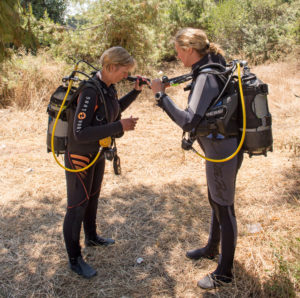
Conducting buddy checks is vital

Crossing that invisible line and becoming a divemaster means the diving is no longer about you. Rather, it’s about the divers that you’re leading — whether that’s pool-refresher session, try dive, guided dive, or indirectly supervised training dive. Learn how to read people and situations as you gather experience. Your assessment of the divers begins the moment you meet them at the dive center, boat or resort. Each word and gesture can tell you something about the diver’s likely behavior in the water and, therefore, help you make a better decision about how to tailor that pool session or guided dive to them. Always plan your dive to the least confident, skillful or experienced diver in the group.

How to improve: Learning how to assess divers and judge situations isn’t something that happens automatically as you qualify as a divemaster — it takes time and experience. Pay close attention to your divers and listen to other, more-experienced professional divers. Ask them why they’re making certain decisions and, if in doubt, choose conservatively.

Have the right equipment

Being a professional diver means having reasonably up to date, well-serviced equipment that is right for the job. It doesn’t necessarily need to be box-fresh, but it shouldn’t be in poor condition, out of date, or held together with cable-ties and tape. Conversely, if you’re about to take in a group of newly certified divers on a simple guided reef dive, you needn’t wear a rebreather, twin-set or multiple stage bottles.

An important psychological aspect of being a good divemaster is to mirror your customers as much as possible and make them feel at ease. Have the core equipment to undertake the job — as specified with the training agency’s standards — together with anything specific to the environment you’ll be working in.

How to improve: Research the environment you’ll be working in to ensure you have what you’ll need. Plan ahead and budget for any new equipment. Build in contingencies such as backup computers, spare masks and a second DSMBs and reel for emergencies.

Expand your experience and knowledge

divemaster

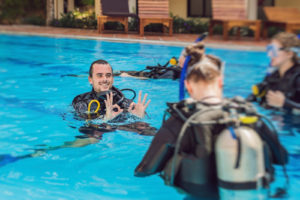
Helping instructors during pool sessions will increase your skills.

Continue to learn and hone your craft. Follow your interests and take continuing-education courses and specialty training that piques your interest. Learn about different areas of diving and gather experience in different environments. Some divemasters complete their training solely on a warm Caribbean reef but would be unsuitable to work in a more challenging, cold water, low-visibility environment of a European lake. Conversely, the divemaster who has worked only in the European lake would be unsuited to guide a dive in strong, swirling currents in southeast Asia. And simply diving in those different environments on holiday or vacation isn’t enough. Watch closely how and why the local divemasters set up, brief and run dives in a certain way; why the boats remain in a certain configuration, where the team stows safety equipment, and what the local procedures are.

How to improve: Broaden your skill set and consider each dive trip a learning experience, not a vacation. Take a notepad and slate. Observe and ask questions. There is always something to learn from environment to environment that will make you a better and more rounded divemaster.

 Attitude

 A good attitude is arguably the most important trait of a great divemaster. As a result, you can be the most skillful diver on the boat but if you’ve got a bad attitude you’ll never succeed. Going the extra mile really separates the great divemasters from the average ones. With that in mind, great divemasters:

  • Never have a bad day or a bad dive. Good divemasters are always on time, prepared, well-rested and ready to go.
  • Collaborate with instructors on training courses. They’ve also researched the course curriculum and have considered where they should be in the water, and what their logistical role may be on land.
  • Appreciate that dive preparation happens well before getting in the water. They fill tanks, load equipment on the boat and complete paperwork. This is all part of a team effort to offer customers a good service and get the job done.
  • Understand that they’re part of a larger team working with the dive center to offer a professional service. A great divemaster also has skills such as website/marketing prowess, equipment maintenance and sales skills.
  • Can communicate with honesty and integrity to customers and other staff members, promoting the business they work for.
  • Have excellent interpersonal skills and can nurture trust and respect in customers and fellow staff members.

How to improve: A good attitude is part nature, part nurture. Above all, a great divemaster will consider the bigger picture of the dive center they’re working for and the industry they’re part of.

Passing your divemaster training is the foundation of becoming a great divemaster, not the finish line at the end of the race. Hone your skills, professionalism and attitude and you’ll grow into a valuable member of the dive team.

The post Training Fundamentals: Becoming a Better Divemaster appeared first on Scuba Diver Life.


from Scuba Diver Life http://bit.ly/2GAWD1f

Training Fundamentals: Becoming a Better Divemaster

Divemaster is typically the first professional level within the recreational diving industry. It's a multifaceted role that non-professional observers often misunderstand, and it's not uncommon during an open-water class for a student to proudly proclaim that they intend to be a divemaster. There are slight variations on the divemaster theme within each training agency and the role varies widely. Being both a great diver and a great divemaster does have some overlap but being a great divemaster is much more than being a great diver.

Becoming a great divemaster

There are thousands of divemasters. Many only remain active for a short time due to natural attrition. Some only complete the divemaster training to expand their knowledge and skill level or for the kudos of being a divemaster. Dive centers and instructors seek out only the best divemasters after they complete their training.

What are the characteristics of a great divemaster? If you're considering undertaking training, or are a new divemaster, how can you improve in those key areas?

Broadly speaking, sought-after divemasters exhibit a professional attitude and behavior. Their skills are buttoned up. In more detail, here's what to aim for if you'd like to gain employment as a divemaster.

Dive skills and knowledge

A divemaster must be not only competent in the water but also capable of diving to demonstration quality. This means having a clear understanding of — and the ability to perform — all core skills from each training course up to and including divemaster level. In addition, some of the skills are general ones that instructors would expect of any professional working alongside them, such as knot tying, deploying DSMBs or navigating on dives to allow the instructor to observe students. In addition, a divemaster should know the training standards and work within them, with a solid understanding of what is required and the integrity to abide by the rules.

How to improve: Practice makes perfect and the skills you feel most uncomfortable with are probably the ones you should concentrate on. Consult the instructor manual to ensure that you hit precise performance requirements and spend time honing your skills. Not sure how to tie that bowline? Are you a little shaky with compass navigation? Practice. Get familiar with training materials, standards and guidelines.

Personal fitness

Diving professionally can be very physically demanding and as such, there are minimum fitness requirements in place for divemaster training, including swimming tests, diver-tow tests and water-skills assessments. These are not a target for meeting the minimum requirements, but rather a gauge to assess where you fall in comparison to the ideal you should aim for – the highest level. The best professional divers see fitness as integral to their role, not as an afterthought.

How to improve: Make a balanced diet and regular cardiovascular exercise part of your normal routine. Being an Olympic athlete isn't necessary but having the solid fitness to deal with emergencies is.

Prioritize safety

Customers and employers want safety to be paramount in your mind as a divemaster. Practice what you preach. Plan the dive, dive the plan. Give the divers you're leading the opportunity to buddy-check. Brief carefully on dive parameters and entry/exit procedures. Ensure all the dives you're responsible for are executed within training parameters and safe limits. Customers need to feel safe with you and employers want to be sure their customers are in good hands. Don't push the envelope. Just because the divers you're leading have an advanced open-water certification doesn't mean you should always aim for a maximum depth of 100 feet (30 m). Use good judgment and conservatism when leading dives based on conditions, ability and comfort.

Similarly, when working with new divers in-water always be in a position to offer immediate physical assistance. Especially on descents and ascents, assess the divers' skill level and use appropriate control criteria. Follow the safety procedures as dictated by the environment you're working in. Work in collaboration with the captain of the boat or local trip leaders to keep your customers safe.

How to improve: Pay attention to more experienced instructors, divemasters and boat captains you may be working with. You can always learn something from them. Know your dive sites and be mindful of local diving laws and regulations. Stay abreast of the standards of the training agency and dive center you represent and make conservative decisions.

 Know your divers

divemaster

Conducting buddy checks is vital

Crossing that invisible line and becoming a divemaster means the diving is no longer about you. Rather, it's about the divers that you're leading — whether that's pool-refresher session, try dive, guided dive, or indirectly supervised training dive. Learn how to read people and situations as you gather experience. Your assessment of the divers begins the moment you meet them at the dive center, boat or resort. Each word and gesture can tell you something about the diver's likely behavior in the water and, therefore, help you make a better decision about how to tailor that pool session or guided dive to them. Always plan your dive to the least confident, skillful or experienced diver in the group.

How to improve: Learning how to assess divers and judge situations isn't something that happens automatically as you qualify as a divemaster — it takes time and experience. Pay close attention to your divers and listen to other, more-experienced professional divers. Ask them why they're making certain decisions and, if in doubt, choose conservatively.

Have the right equipment

Being a professional diver means having reasonably up to date, well-serviced equipment that is right for the job. It doesn't necessarily need to be box-fresh, but it shouldn't be in poor condition, out of date, or held together with cable-ties and tape. Conversely, if you're about to take in a group of newly certified divers on a simple guided reef dive, you needn't wear a rebreather, twin-set or multiple stage bottles.

An important psychological aspect of being a good divemaster is to mirror your customers as much as possible and make them feel at ease. Have the core equipment to undertake the job — as specified with the training agency's standards — together with anything specific to the environment you'll be working in.

How to improve: Research the environment you'll be working in to ensure you have what you'll need. Plan ahead and budget for any new equipment. Build in contingencies such as backup computers, spare masks and a second DSMBs and reel for emergencies.

Expand your experience and knowledge

divemaster

Helping instructors during pool sessions will increase your skills.

Continue to learn and hone your craft. Follow your interests and take continuing-education courses and specialty training that piques your interest. Learn about different areas of diving and gather experience in different environments. Some divemasters complete their training solely on a warm Caribbean reef but would be unsuitable to work in a more challenging, cold water, low-visibility environment of a European lake. Conversely, the divemaster who has worked only in the European lake would be unsuited to guide a dive in strong, swirling currents in southeast Asia. And simply diving in those different environments on holiday or vacation isn't enough. Watch closely how and why the local divemasters set up, brief and run dives in a certain way; why the boats remain in a certain configuration, where the team stows safety equipment, and what the local procedures are.

How to improve: Broaden your skill set and consider each dive trip a learning experience, not a vacation. Take a notepad and slate. Observe and ask questions. There is always something to learn from environment to environment that will make you a better and more rounded divemaster.

 Attitude

 A good attitude is arguably the most important trait of a great divemaster. As a result, you can be the most skillful diver on the boat but if you've got a bad attitude you'll never succeed. Going the extra mile really separates the great divemasters from the average ones. With that in mind, great divemasters:

  • Never have a bad day or a bad dive. Good divemasters are always on time, prepared, well-rested and ready to go.
  • Collaborate with instructors on training courses. They've also researched the course curriculum and have considered where they should be in the water, and what their logistical role may be on land.
  • Appreciate that dive preparation happens well before getting in the water. They fill tanks, load equipment on the boat and complete paperwork. This is all part of a team effort to offer customers a good service and get the job done.
  • Understand that they're part of a larger team working with the dive center to offer a professional service. A great divemaster also has skills such as website/marketing prowess, equipment maintenance and sales skills.
  • Can communicate with honesty and integrity to customers and other staff members, promoting the business they work for.
  • Have excellent interpersonal skills and can nurture trust and respect in customers and fellow staff members.

How to improve: A good attitude is part nature, part nurture. Above all, a great divemaster will consider the bigger picture of the dive center they're working for and the industry they're part of.

Passing your divemaster training is the foundation of becoming a great divemaster, not the finish line at the end of the race. Hone your skills, professionalism and attitude and you'll grow into a valuable member of the dive team.

The post Training Fundamentals: Becoming a Better Divemaster appeared first on Scuba Diver Life.


from Scuba Diver Life http://bit.ly/2GAWD1f

Thursday, December 20, 2018

Colwood Corners by Onni in Victoria

Colwood Corners by Onni Group is a new 5 storey condo development located in Victoria, BC. This project will offer 284 units. Upon completion, Colwood Corners has the potential to provide 125,000 square feet of retail as well as multi-family residential.

The post Colwood Corners by Onni in Victoria appeared first on Vancouver New Condos.


from Projects – Vancouver New Condos https://ift.tt/2A5mWqs

Explorer Ventures Fleet First Liveaboard to Receive Green Fins Membership

In collaboration with The Reef-World Foundation, international coordinators of Green Fins, we are pleased to announce that our beloved Caribbean Explorer II (operating in Saba & St. Kitts) has become the very first liveaboard to receive a Green Fins membership.

What is Green Fins?

Green Fins is the only internationally recognized environmental standard for dive and snorkel operators, established through a partnership between United Nations (UN) Environment and The Reef World Foundation. Green Fins uses a unique and proven three-pronged approach: green certifications of dive centers, strengthening regulations and environmental education for dive staff, and divers and government. consistent reduction in threats to the marine environment have been measured within the 550-plus businesses that have implemented Green Fins across nine countries, reflecting continued improvements in environmental practice.


We are excited that our Caribbean-based vessel has become a pioneering liveaboard for the Green Fins initiative.

“We are aware that as a global dive business, we depend on a fragile marine ecosystem which is increasingly threatened by a multitude of factors worldwide,” says and operator Clay McCardell.

“We believe that we have an obligation and a responsibility to act as stewards of our environment, so that future generations will be able to enjoy the ocean as we do. Our goal is to enhance sustainability on our own operations, but more so, act as a leading liveaboard fleet for Green Fins. Explorer Ventures will continue to assist The Reef-World Foundation in establishing targeted liveaboard protocols which can eventually be adapted globally to any other operators that Green Fins brings onboard.”

Throughout 2018, the Explorer Venture’s team has worked closely with Reef-World as campaign partners for the Green Fins International Year of the Reef (IYOR) 2018 social media campaign as well as undertaking the very first Green Fins liveaboard assessment. Our impression is very positive so far, and Caribbean Explorer II is now the first official Green Fins liveaboard member. This initial collaboration is just a small portion of our strengthening symbiotic partnership. We will continue to work with Reef-World and we look forward to nurturing even more positive and impactful change for our oceans. After all, a healthy ocean is a healthy business.

For more information please visit Explorer Ventures.  

____

About Explorer Ventures

The Explorer Ventures liveaboard diving fleet offers five destinations including the Northeastern Caribbean (Saba/St. Kitts), the Turks & Caicos Islands, the Galapagos Islands and Indonesia. The M/V Turks & Caicos Explorer II also spends 10 weeks in the winter/spring offering snorkeling with humpback whales on the Silver Bank, Dominican Republic, under charter to Aquatic Adventures.

About The Reef-World Foundation & Green Fins

Reef-World supports governments and communities in sustainable consumption and production of coastal resources and marine life. This is done through the Green Fins initiative, established and implemented in partnership with UN Environment. Green Fins is a free membership program for participating businesses that provide scuba diving or snorkeling activities and pledge to follow a set of best environmental practices. 

Contact Rachel Huber, Explorer Ventures Liveaboard Diving Fleet for more details.


The post Explorer Ventures Fleet First Liveaboard to Receive Green Fins Membership appeared first on Scuba Diver Life.


from Scuba Diver Life https://ift.tt/2UZlUVT

Explorer Ventures Fleet First Liveaboard to Receive Green Fins Membership

In collaboration with The Reef-World Foundation, international coordinators of Green Fins, we are pleased to announce that our beloved Caribbean Explorer II (operating in Saba & St. Kitts) has become the very first liveaboard to receive a Green Fins membership.

What is Green Fins?

Green Fins is the only internationally recognized environmental standard for dive and snorkel operators, established through a partnership between United Nations (UN) Environment and The Reef World Foundation. Green Fins uses a unique and proven three-pronged approach: green certifications of dive centers, strengthening regulations and environmental education for dive staff, and divers and government. consistent reduction in threats to the marine environment have been measured within the 550-plus businesses that have implemented Green Fins across nine countries, reflecting continued improvements in environmental practice.


We are excited that our Caribbean-based vessel has become a pioneering liveaboard for the Green Fins initiative.

"We are aware that as a global dive business, we depend on a fragile marine ecosystem which is increasingly threatened by a multitude of factors worldwide," says and operator Clay McCardell.

"We believe that we have an obligation and a responsibility to act as stewards of our environment, so that future generations will be able to enjoy the ocean as we do. Our goal is to enhance sustainability on our own operations, but more so, act as a leading liveaboard fleet for Green Fins. Explorer Ventures will continue to assist The Reef-World Foundation in establishing targeted liveaboard protocols which can eventually be adapted globally to any other operators that Green Fins brings onboard."

Throughout 2018, the Explorer Venture's team has worked closely with Reef-World as campaign partners for the Green Fins International Year of the Reef (IYOR) 2018 social media campaign as well as undertaking the very first Green Fins liveaboard assessment. Our impression is very positive so far, and Caribbean Explorer II is now the first official Green Fins liveaboard member. This initial collaboration is just a small portion of our strengthening symbiotic partnership. We will continue to work with Reef-World and we look forward to nurturing even more positive and impactful change for our oceans. After all, a healthy ocean is a healthy business.

For more information please visit Explorer Ventures.  

____

About Explorer Ventures

The Explorer Ventures liveaboard diving fleet offers five destinations including the Northeastern Caribbean (Saba/St. Kitts), the Turks & Caicos Islands, the Galapagos Islands and Indonesia. The M/V Turks & Caicos Explorer II also spends 10 weeks in the winter/spring offering snorkeling with humpback whales on the Silver Bank, Dominican Republic, under charter to Aquatic Adventures.

About The Reef-World Foundation & Green Fins

Reef-World supports governments and communities in sustainable consumption and production of coastal resources and marine life. This is done through the Green Fins initiative, established and implemented in partnership with UN Environment. Green Fins is a free membership program for participating businesses that provide scuba diving or snorkeling activities and pledge to follow a set of best environmental practices. 

Contact Rachel Huber, Explorer Ventures Liveaboard Diving Fleet for more details.


The post Explorer Ventures Fleet First Liveaboard to Receive Green Fins Membership appeared first on Scuba Diver Life.


from Scuba Diver Life https://ift.tt/2UZlUVT